
Georgia Hog Hunting: Where and When You Can Hunt
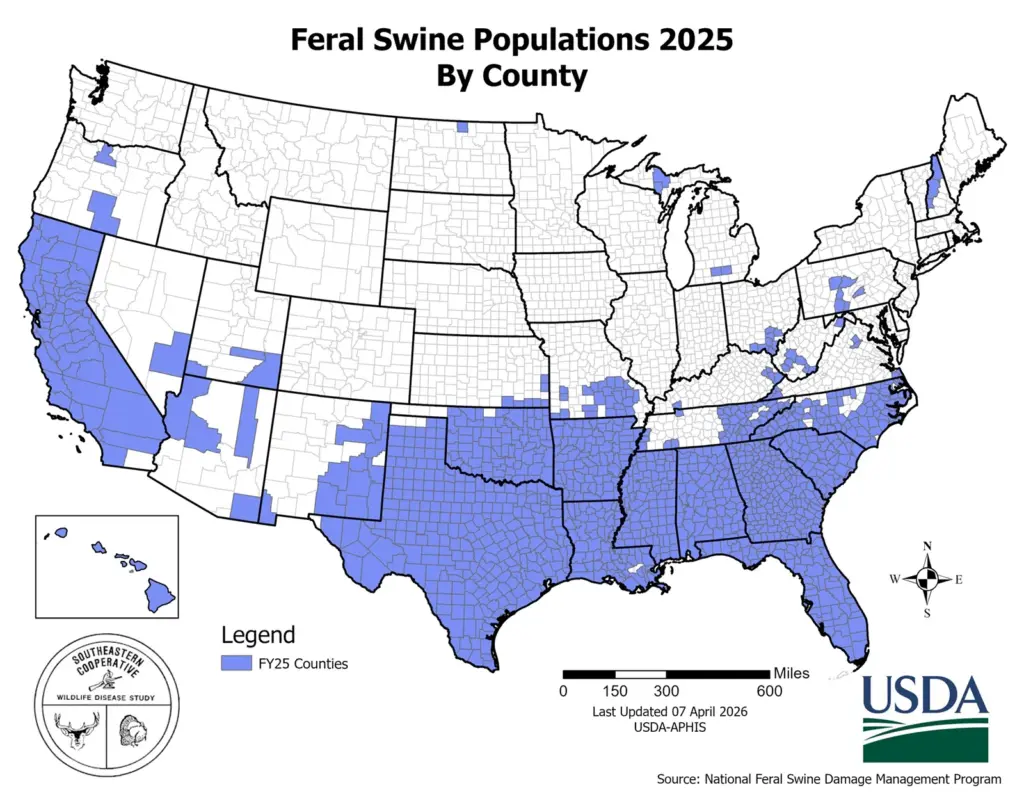
When I found out I was moving to Georgia, one of the things I was most excited about was getting to hunt feral hogs. I’d heard how widespread they were here and figured finding some would be the easy part. I learned pretty quickly how much legwork it can take to find fresh hog sign, especially on public land.
If you’re trying to plan your first Georgia hog hunt, start with two questions: Where can I hunt, and when is it open? On private land, you can hunt year-round with the landowner’s permission. On a wildlife management area (WMA), the answer depends on the property and what’s open when you want to go. Here’s how to sort that out before you make the drive.
Georgia hog hunting rules at a glance
| Where you hunt | When you can hunt hogs in 2026–27 | Night hunting and bait |
|---|---|---|
| Private land | Year-round with permission | Both allowed under state hog hunting rules |
| Georgia WMAs | During eligible hunts open on that WMA, plus May 16–31, 2027, on participating areas | Both prohibited |
| National forest land outside WMAs | During applicable open deer, turkey or small game seasons, subject to federal area rules | Both prohibited |
There is no bag limit for feral hogs on private land, WMAs or national forest land under the Georgia guide. Public-land hunts have their own equipment and access rules. National wildlife refuges and other federal properties can also have separate dates and permits.
Do you need a Georgia hunting license for hogs?
Georgia residents 16 and older generally need a hunting license. The resident exemption covers land you own or land owned by immediate family living in your household. Nonresidents need a Georgia nonresident hunting license. For hogs alone, Georgia lists a hunting license as the required privilege. If you’ll also hunt deer, bear or turkey on the trip, check the separate requirements for those species.
The 2026–27 guide lists the annual hunting license at $15 for Georgia residents ages 16–64 and $100 for nonresidents. A nonresident hunting license is $20 for one day and $6 for each additional consecutive day, before transaction fees. For a weekend hog hunt, that’s $26 for two days before fees. Check the license guide for youth and senior rules.
Where to hunt hogs on Georgia public land
Start with the Georgia DNR public hunting map and pull up two or three WMAs within a drive you’re willing to make twice. Read the current listing for each one. Look for tract boundaries, open hunt dates, quota requirements and any restrictions under Area Notes. Then check DNR’s alerts and closures before you leave. A campground or trail can be open while the access road you planned to use is gated.
Here’s how that looks at three Georgia WMAs.
- Oaky Woods WMA, middle Georgia. DNR lists feral hog hunting here, and the 2026–27 guide lists a May 16–31 coyote season. It’s a place to research if you’re within driving distance of Perry. Check the main gate schedule before choosing your access point.
- Morgan Lake WMA, southeast Georgia. The property is archery-only for all species. Its May listing doesn’t change that restriction.
- Ossabaw Island WMA, coast. The 2027 hog quota hunts are Jan. 14–16 and Feb. 11–13, with 100 spots per hunt. Hunters must arrange their own boat transportation. Ossabaw has no May 16–31 hog hunt, and the Oct. 15 application deadline for the 2026–27 quota cycle has passed.
Can you hunt hogs during small game season?
Generally, yes, on a WMA where small game hunting is open and the property listing allows it. The equipment rules follow the hunt that’s open on those dates. Centerfire firearms are prohibited on WMA small game dates. Small game hunting generally closes during quota hunts unless the property listing says otherwise, so check the calendar even if the listing says “State Seasons.” The guide also requires fluorescent orange or blaze pink for hog hunters during firearms and primitive weapons deer and bear hunts and on participating WMAs during the May opportunity.
What to look for on your first scouting trip
Give yourself enough time to walk one part of the property and look for fresh sign. Rooting looks like patches of ground that have been turned over. Look for tracks in soft ground and for muddy wallows. A patch of old rooting tells you hogs have been there. Fresh tracks in the same area give you a better reason to come back.
On private land, ask the landowner where they’ve seen recent damage and which gates and roads you can use. On public land, download the property map before you leave home. Mark where you can park and how far you’ll have to carry a hog out. If you’ll be relying on a processor, call before the trip and confirm they take feral hogs. Georgia requires facilities that process hogs for a fee to be licensed by the state Department of Agriculture. The Georgia Afield deer processor directory can help you find nearby businesses to call.
Can you eat a Georgia feral hog?
Yes. Bring a cooler with ice, disposable waterproof gloves and eye protection. Feral hogs can carry brucellosis, which can spread through contact with blood and tissues while field dressing or butchering. Wash your hands and clean and disinfect tools after processing. The CDC recommends cooking wild hog meat to an internal temperature of 160°F, measured with a food thermometer.
While Georgia Afield works to keep this information accurate and current, hunting dates and regulations can change and may vary by county or property. Always consult the current Georgia hunting regulations and any applicable property-specific rules before heading afield.