Public Land Deer Hunting in Georgia: A Beginner’s Guide
Updated for the 2026–27 Georgia deer season
If you want to deer hunt in Georgia but don’t own land or belong to a hunting club, you still have plenty of places to go.
Georgia’s public hunting system includes Wildlife Management Areas, Voluntary Public Access properties, National Forest land, state parks and several other types of publicly accessible property. Some offer deer hunting for much of the season, while others may open for only a handful of carefully managed hunts each year.
For someone accustomed to hunting private land, the public-land system can look complicated at first. Hunt dates may differ from the statewide season. Some hunts require an advance application. Others may have special antler restrictions, limited firearms dates or rules that apply only to that particular property.
I’ve spent more than 30 years hunting public land, and I also spent part of my career working for the Georgia Department of Natural Resources and managing WMAs. I’ve seen the system from both sides, and the truth is that it isn’t nearly as difficult to navigate as it first appears.
The key is understanding a few basic terms, knowing where to find the regulations and accepting one important fact from the beginning: every public hunting property is a little different.
Start With the Property, Not the Statewide Season
This is probably the most important lesson for anyone new to public-land deer hunting in Georgia.
Don’t look at the statewide deer season dates and automatically assume they apply to the WMA you plan to hunt.
On private land, statewide dates and county-specific regulations will usually tell you when and how you can deer hunt. Public land is different because individual properties can have their own hunt schedules.
One WMA might offer archery hunting for several months but only a few days of firearms hunting. Another may offer several short firearms hunts scattered through fall and winter. Some areas are archery-only, and others may include quota hunts, youth hunts, specialty hunts or bonus deer opportunities.
The Georgia Wildlife Resources Division specifically directs hunters to read both the statewide regulations and the listing for the individual property they’re hunting. The current guide notes that WMAs, VPAs and state parks have different rules based on factors such as habitat, access, wildlife populations and management objectives.
Before I hunt an unfamiliar public property, I want to know seven things: when the property is open for deer hunting, which weapon is legal, whether a quota permit is required, whether the hunt is buck-only or either-sex, whether it is a bonus hunt, whether antler restrictions apply, and whether there are any special access rules.
Answer those questions before you leave home and you’ll eliminate most of the confusion that gets new public-land hunters in trouble.
What Counts as Public Hunting Land in Georgia?
When Georgia hunters talk about public land, they often use “WMA” as a catch-all term. Wildlife Management Areas certainly make up a major part of the system, but they aren’t the only places available.
Wildlife Management Areas
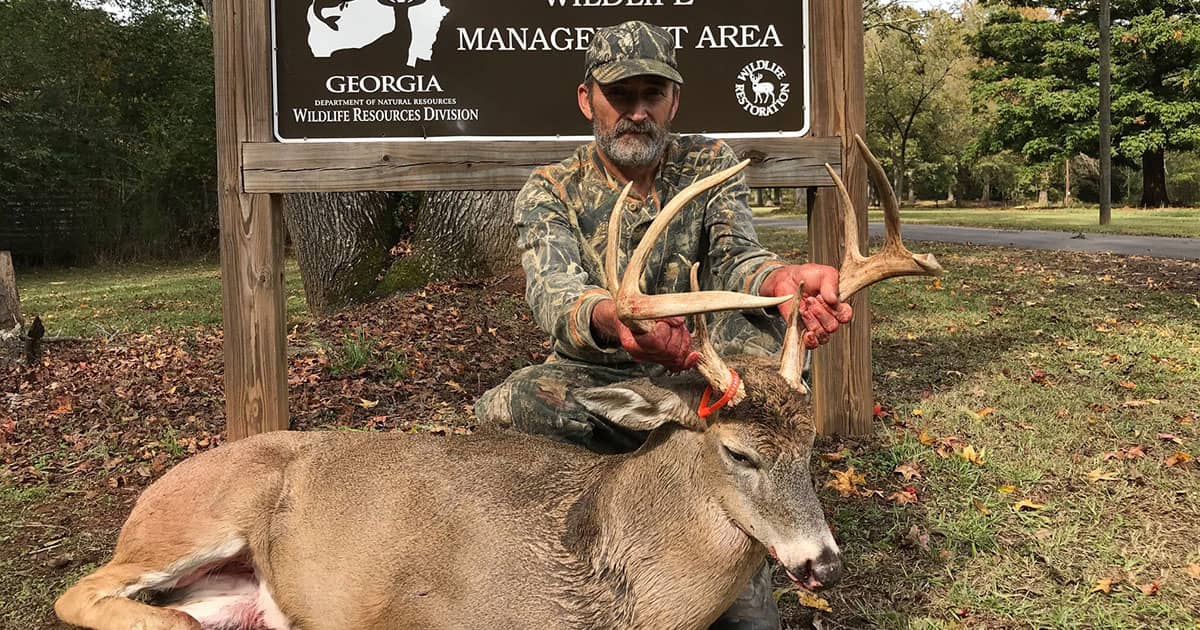
Georgia’s WMAs range from relatively small properties to sprawling tracts covering thousands of acres. They also represent just about every major habitat type in the state.
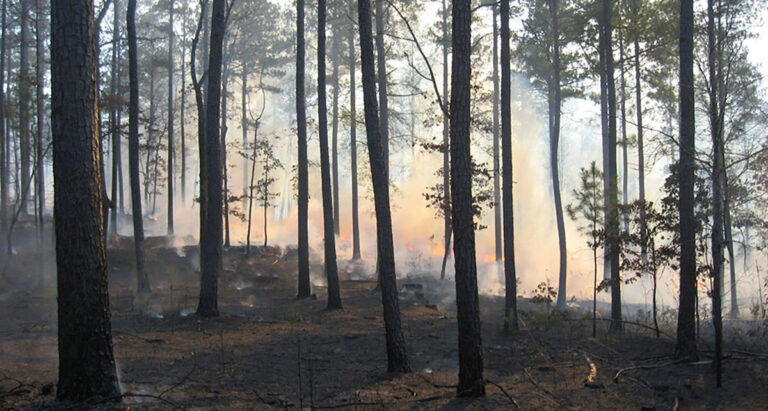
A North Georgia WMA may mean steep hardwood ridges, mountain laurel and long climbs from the nearest road. In the Piedmont, you may find a mix of pine stands, hardwood bottoms, old logging roads and recent timber cuts. Farther south, public land can include pine plantations, river swamps, palmetto flats and agricultural fields.
More importantly, each property may have a completely different deer-hunting schedule. The 2026–27 regulations include everything from long archery seasons to short firearms hunts and tightly controlled quota opportunities.
That variety is one of the strengths of Georgia’s public-land system, but it also means you can’t learn the rules for one WMA and assume they apply to the next.
Voluntary Public Access Properties
Georgia’s Voluntary Public Access program, commonly called VPA, opens certain privately owned properties to public recreation through agreements with landowners.
These properties can provide additional hunting opportunities in places where traditional public land may be limited. However, they aren’t simply private farms where hunters can show up whenever they want. Each property has its own open dates, permitted activities and regulations.
Treat a VPA exactly as you would a WMA: read the current listing before you hunt.
National Forest Land
The Chattahoochee and Oconee National Forests provide some of Georgia’s largest expanses of publicly accessible hunting land, but they’re also a common source of confusion.
Some National Forest acreage lies within WMAs and follows that WMA’s regulations. Other National Forest lands are governed under different state and federal rules. Roads may be seasonally closed, camping rules may differ, and fees can apply at certain campgrounds, shooting ranges, boat ramps or recreation areas.
The lesson here is the same: know exactly where you are.
Don’t look at a big green block on an app and assume every acre inside it follows the same hunting regulations.
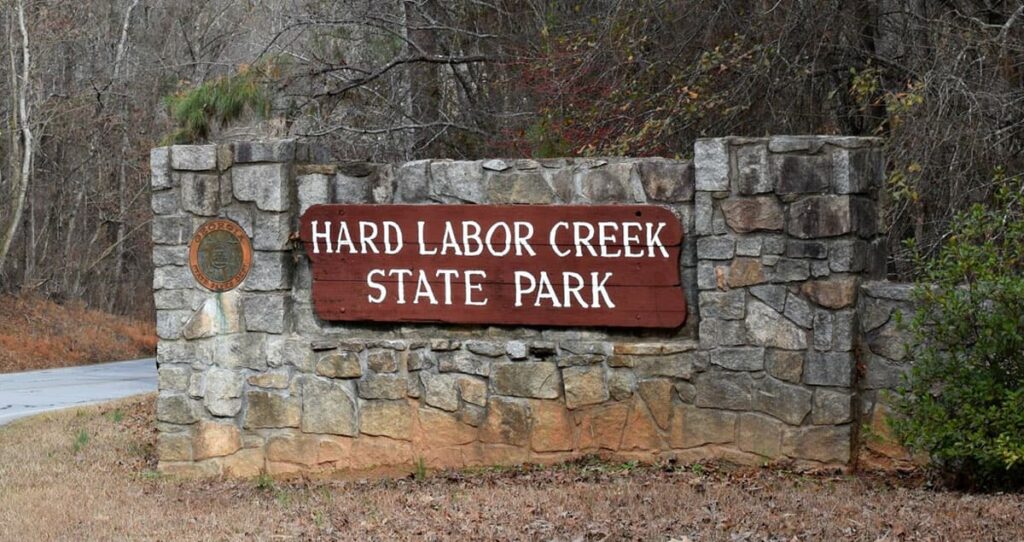
State Parks and Other Public Properties
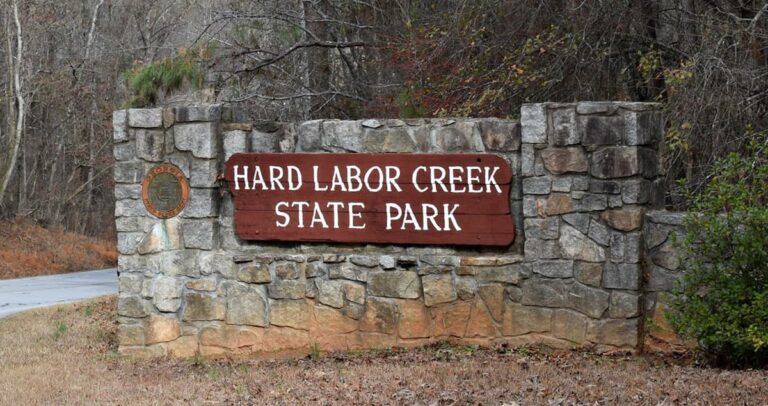
Several Georgia state parks conduct controlled deer hunts, often as part of their deer-management programs. Many require a quota permit, and some have hunt fees, check-in procedures or other property-specific requirements.
Hunters can also find opportunities on some National Wildlife Refuges, Corps of Engineers lands, military installations and other government properties. Those hunts can be excellent, but they may come with additional permits, federal rules or access requirements beyond a standard Georgia hunting license.
Sometimes the places that require a little more homework are worth the effort simply because fewer hunters are willing to do it.
What Licenses Do You Need?
The exact answer depends on your age, residency and whether you qualify for an exemption, but deer hunters should make sure they have the appropriate hunting and big-game privileges along with a current Harvest Record.
Georgia requires a Harvest Record for anyone hunting deer, regardless of age. For a normal deer harvest, the animal must be recorded before it is moved from the kill site and reported through Georgia Game Check within 24 hours.
There’s another public-land requirement worth knowing. Anyone age 16 or older entering a WMA or PFA generally must possess either a valid Georgia license that allows hunting or fishing on state lands or a Lands Pass, unless an exemption applies.
If you’re new to Georgia hunting, don’t guess at your license requirements. Check your Go Outdoors Georgia account before the hunt and make sure everything is current.
The Public-Land Terms That Confuse New Hunters
A few terms show up over and over in the WMA listings. They aren’t difficult once you understand what each one describes.
| Term | What it means |
|---|---|
| Quota Hunt | Participation is limited to a set number of hunters, and you must apply and be selected in advance. |
| Sign-In Hunt | You must complete the required sign-in before hunting. For 2026–27, all WMA deer, bear and turkey hunts require sign-in unless the property listing says otherwise. |
| Bonus Deer Hunt | Deer taken under the bonus designation do not count against your normal statewide season bag limit and are handled through the designated check station rather than normal Game Check procedures. |
| Buck Only | Only legal antlered deer may be taken. |
| Antlerless Only | Only deer without visible antlers above the hairline may be taken. |
| Either-Sex | Either antlered or antlerless deer may be taken, subject to other applicable regulations. |
| Antler Restricted | Legal bucks must meet the antler criteria specified for the property. |
The important thing to remember is that those terms describe different parts of the hunt.
A hunt can be quota and bonus. A bonus hunt can also require sign-in. These aren’t competing categories.
Quota Hunts and Priority Points
A quota hunt limits participation to a predetermined number of hunters. You apply through Georgia’s quota system, and if you’re selected, you receive the opportunity to participate in that hunt.
Georgia also uses a priority-point system. An unsuccessful applicant receives a priority point, and those points can be used on future applications to improve the chances of drawing popular hunts. Only the number of points needed to draw a hunt is deducted when an applicant is selected. 2026-2027 Georgia Hunting and F…
For the 2026–27 season, the deadline for general deer and state-park deer quota applications was Sept. 1. The annual application period begins June 1. Quota Hunts
Even if you’re not interested in a quota hunt this year, I think it’s worth learning the system and accumulating points. Some of Georgia’s more desirable public-land deer opportunities require several years of patience.
Bonus Deer Hunts
Bonus deer hunts are another source of confusion.
The word “bonus” doesn’t mean the hunt is automatically quota, and it doesn’t simply mean the property has a liberal bag limit. It refers to how deer taken during the hunt are counted.
Under the 2026–27 rules, deer taken on a designated bonus hunt are not entered on your normal Harvest Record or reported through Game Check. Instead, the deer must be taken to the designated check station on the day of harvest for tagging. Unless the area listing says otherwise, hunters may take no more than two deer on a bonus hunt, and on an antler-restricted area only one may be an antlered buck.
That’s a good example of why it pays to understand the symbols beside each hunt before opening morning.
Can You Hunt Over Corn on a Georgia WMA?
No.
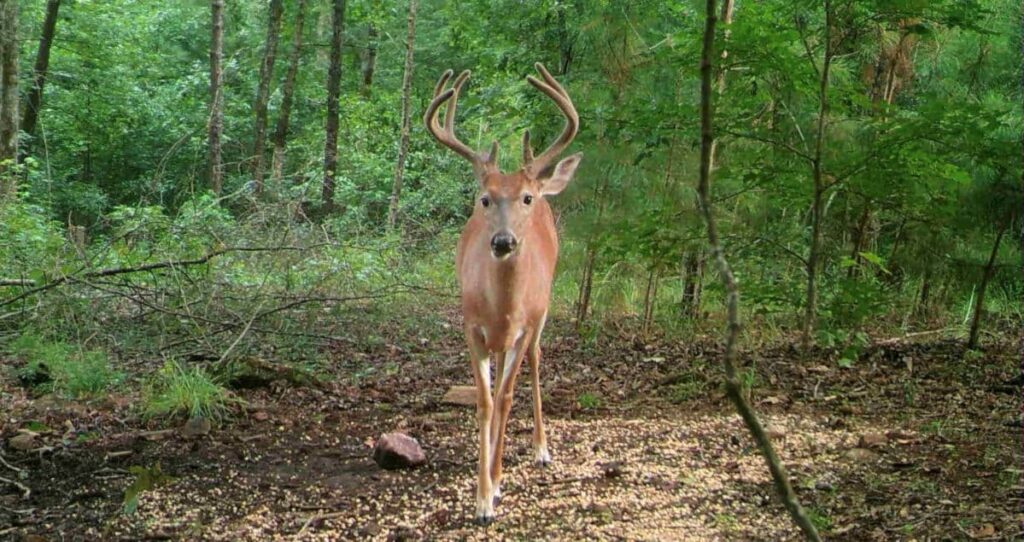
Hunting deer over bait may be legal on private land under Georgia law, but public-land regulations are different. Current WMA rules prohibit placing bait or wildlife food and hunting game or feral hogs over it.
If you’ve spent most of your time hunting private land over feeders, public-land hunting forces you to get back to reading natural deer movement.
That means learning mast-producing hardwoods, browse, cutovers, agricultural fields where available, creek crossings, bedding cover and terrain features. In my opinion, that’s part of what makes public-land hunting rewarding.
You can’t simply create the deer movement you want. You have to figure out the movement that’s already there.
Antler Restrictions and Either-Sex Rules
Don’t assume the deer that’s legal on private land across the road is legal on the WMA.
The current WMA regulations state that antler-restricted areas generally require an antlered buck to have at least four points one inch or longer on either antler, or an outside antler spread of at least 15 inches. Individual areas can have additional restrictions.
The same caution applies to antlerless harvest. WMA listings may identify hunts as buck-only, antlerless-only, either-sex or either-sex only on the final day or two of a hunt.
This isn’t something you want to be trying to figure out while a buck is walking through the timber at 40 yards.
Know the rules before you climb the tree.
Access, Roads, ATVs and Camping
A surprising amount of public-land hunting success comes down to understanding access.
A road on a map doesn’t necessarily mean the road will be open. Gates may be closed seasonally or permanently, and driving around gates, berms or other barriers intended to stop vehicle access is prohibited. 2026-2027 Georgia Hunting and F…
ATV rules also vary by property. Some areas allow limited motorized access while others prohibit ATVs entirely. If your plan depends on driving deep into a property, find out whether that’s actually possible before opening morning.
Camping is generally allowed on WMAs year-round unless the individual listing says otherwise. Camps and campfires normally must be in designated campgrounds, and the current rules limit a campsite to 14 consecutive days before it must be vacated for at least seven days. Some DNR campgrounds may also require a fee or reservation.
All of that may sound like housekeeping, but knowing access can be every bit as important as knowing where the deer are.
Georgia WMAs also have several rules that can surprise hunters who are used to private land, from restrictions on baiting and road hunting to deer drives and target practice. I’ve broken those down separately in 7 Things You Can’t Do While Hunting Georgia WMAs.
Choosing Your First Georgia WMA
One of the most common questions from new public-land hunters is, “Which WMA should I hunt?”
My answer usually isn’t the name of a known big-buck property.
I’d start with a WMA close enough to home that you can learn it.
A decent WMA 30 or 40 minutes away that you can scout repeatedly will usually be more valuable to you than a well-known destination three hours away that you only see twice a year.
Look at the property’s actual deer-hunt schedule first. If you’re primarily a bowhunter, a property with extensive archery opportunity may suit you better than a WMA famous for one November quota hunt. If you want to hunt with a rifle, find out how many firearms days are actually available before investing several scouting trips.
Harvest data can help too, but it needs context. The WMA with the highest total deer harvest isn’t automatically the best place to hunt. A huge property with hundreds of participating hunters should produce more deer than a small WMA with limited access.
I prefer looking at several years of harvest totals, hunter numbers and success rates. That helps separate a consistently productive property from one that simply had an unusual season.
That’s an area where we’re continuing to build out Georgia Afield’s public-land resources.
Scout Deer — and Scout Hunters
When I worked on WMAs, one thing became obvious: hunting pressure is rarely distributed evenly.
Hunters tend to concentrate around the same places. They park at obvious pull-offs, follow old logging roads and hunt established food plots. Areas that look good on an aerial photo and are easy to reach tend to attract people.
That’s useful information.
Public-land scouting isn’t just about finding rubs, trails and acorns. You should also be looking for parked trucks, boot tracks, treestands and heavily used access points.
Then ask yourself where a deer trying to avoid all that activity might go.
Sometimes the answer is a mile from the road. Other times it’s an ugly patch of cover a few hundred yards behind a parking area that everybody walks past.
Farther isn’t automatically better. Different often is.
Food Plots Aren’t Always the Best Place to Sit
Public-land food plots can absolutely attract deer. They can also attract hunters like a porch light attracts bugs.
A plot that’s easy to reach may get hunted repeatedly throughout the season. Mature deer don’t need many encounters with people to adjust their behavior.
Rather than sitting directly over the opening, I often prefer looking at how deer approach it. Thick staging cover, secondary trails, creek crossings and terrain features between bedding areas and the food source can sometimes produce better daylight movement.
The plot may tell you why deer are using an area without necessarily being the best place to hang a stand.
Call the Person Who Manages the Property
One of the most overlooked scouting tools costs nothing: Call the WMA manager, wildlife technician or biologist.
I’ve been on the other end of those calls, and there’s a right and wrong way to approach them.
“Where should I sit to kill a big buck?” isn’t going to get you very far.
A hunter who has already studied the map and asks about recent timber harvests, prescribed burns, mast conditions, road changes or hunting pressure is much more likely to learn something useful.
The people managing these properties spend a lot of time on the ground. They know where habitat work has occurred and which roads have changed. They may not hand you a hunting spot—and they shouldn’t—but they can help point your scouting in the right direction.
Public-Land Etiquette Still Matters
You’re eventually going to pull into a parking area and find another truck where you hoped to hunt.
You’re going to have somebody walk through your setup. And at some point, you’ll probably walk in on somebody else. That’s public-land hunting.
Nobody owns a ridge, creek bottom or tree because they’ve hunted it for 10 years or because they left a stand hanging there. Generally speaking, the guy who gets there first has just as much right to hunt the area as anyone else.
I’ve hunted public ground for decades and have had very few real confrontations. Most problems can be avoided with a little common sense.
If another hunter is already parked in a small access area, I usually go somewhere else. If we arrive at the same time, I’ll talk to him and find out which general direction he’s going. Neither of us needs to reveal a favorite stand location; we’re just trying to avoid setting up on top of each other.
And if you accidentally walk in on someone, acknowledge it and back out quietly.
No deer is worth turning a morning hunt into a parking-lot argument.
Have More Than One Place to Hunt
I rarely head onto public land with only one plan.
If your entire morning depends on hunting one tree and somebody beats you there, you’re already frustrated before daylight.
A better approach is to know several areas.
Your first choice might be a ridge where you found fresh sign. Your backup could be a creek crossing half a mile away. Your third option might be a small pocket near another parking area.
That flexibility is especially valuable on short firearms hunts when hunter numbers can change dramatically from one day to the next.
It’s also one of the reasons I like scouting a property over several seasons. Eventually you stop thinking in terms of “my spot” and start understanding how the entire WMA fits together.
Don’t Expect to Learn a WMA in a Weekend
Public land rewards patience.
Your first season on a property may mostly be spent learning roads, gates and access. After that, you begin understanding where the best habitat is. Then you notice which areas get hammered by hunters and where deer tend to move when the pressure increases.
A few years later, the property looks completely different to you than it did the first time you pulled up the map.
That’s when public-land hunting really starts getting fun.
You aren’t simply looking for deer anymore. You’re understanding why they’re using certain places at certain times.
What Happens After You Shoot a Deer?
Think about recovery before you pull the trigger.
On a normal hunt, Georgia’s Harvest Record and Game Check requirements apply. The deer must be recorded before being moved from the kill site and reported within the required time period. 2026-2027 Georgia Hunting and F…
Bonus hunts are handled differently through the designated check station, so make sure you know which type of hunt you’re participating in before heading afield.
It’s also worth thinking about recovery before the hunt. Can you drag a deer from where you’re hunting? Would a game cart work? Is the terrain steep enough that quartering the deer may make more sense?
Dragging a mature buck half a mile uphill is a lousy time to discover that your access plan wasn’t very good.
Also, if you make a marginal shot and need help, know how to contact a deer tracking dog or a drone deer recovery operator in your area before you need one. Likewise, having a local deer processor picked out ahead of time can save you some scrambling after a successful evening hunt.
A Simple Plan for Your First Public-Land Hunt
If you’re ready to give Georgia public-land deer hunting a try, don’t make it more complicated than it needs to be.
- Pick a WMA or other public property reasonably close to home.
- Read the current property listing from beginning to end.
- Choose an open deer hunt that matches the weapon you want to use.
- Study the property map and identify several access points.
- Scout those areas in person and look for both deer sign and hunting pressure.
- Mark at least three possible hunting locations rather than relying on one spot.
- Complete any required sign-in and make sure your licenses and Harvest Record are current.
- Go hunt, learn something and adjust the next time you go.
Don’t worry about whether you’ve found the “best WMA in Georgia.” Don’t worry about whether someone posted a giant buck from another property on Facebook last week.
Learn one piece of public land well.
That’s how it starts.
Why Public Land Is Worth the Effort
Public-land deer hunting isn’t always convenient.
You’ll lose spots to other hunters. Gates won’t always be where you expect them. Deer will disappear after hunting pressure increases, and there will be mornings when you walk back to the truck wondering why you didn’t just stay home and watch football.
But when it comes together, there’s a satisfaction that’s hard to duplicate.
You found the area. You studied the habitat. You figured out the pressure.
Nobody saved the spot for you, and nobody managed the property around your stand.
You took an opportunity that was available to every other hunter willing to put in the effort and made it work.
And at a time when private leases aren’t getting any cheaper, learning how to take advantage of Georgia’s public hunting opportunities may be one of the most valuable skills a deer hunter can develop.
Pick a property. Read the regulations. Start walking.
There’s a lot of good deer country out there waiting to be figured out.
While Georgia Afield works to keep this information accurate and current, hunting dates and regulations can change and may vary by county or property. Always consult the current Georgia hunting regulations and any applicable property-specific rules before heading afield.